In this guide · 13 parts
A night in a Merzouga desert camp starts with a camel ride of about 1 h 30 at sunset, then mint tea, dinner by the fire, Berber music and a sky full of stars. Tents have beds and blankets; luxury tents have their own bathroom. You wake before dawn for sunrise.
Late afternoon: meeting your camels
Your vehicle stops at the edge of Erg Chebbi, where the camels are waiting, kneeling in the sand. Your big luggage stays in the vehicle; you take only a small bag for the night. The camel guide helps you climb on: hold the handle, lean back as the camel stands up on its back legs first, then forward as it rises on its front legs. It sounds dramatic; it takes three seconds.
The ride in
The caravan walks in single file along the dunes, slowly, for about an hour and a half. Halfway, the guides usually stop on a high dune so you can watch the sunset: the sand goes from pale gold to orange to deep red, and the shadows of the dunes stretch out like waves. This is the moment most people take their best photographs.
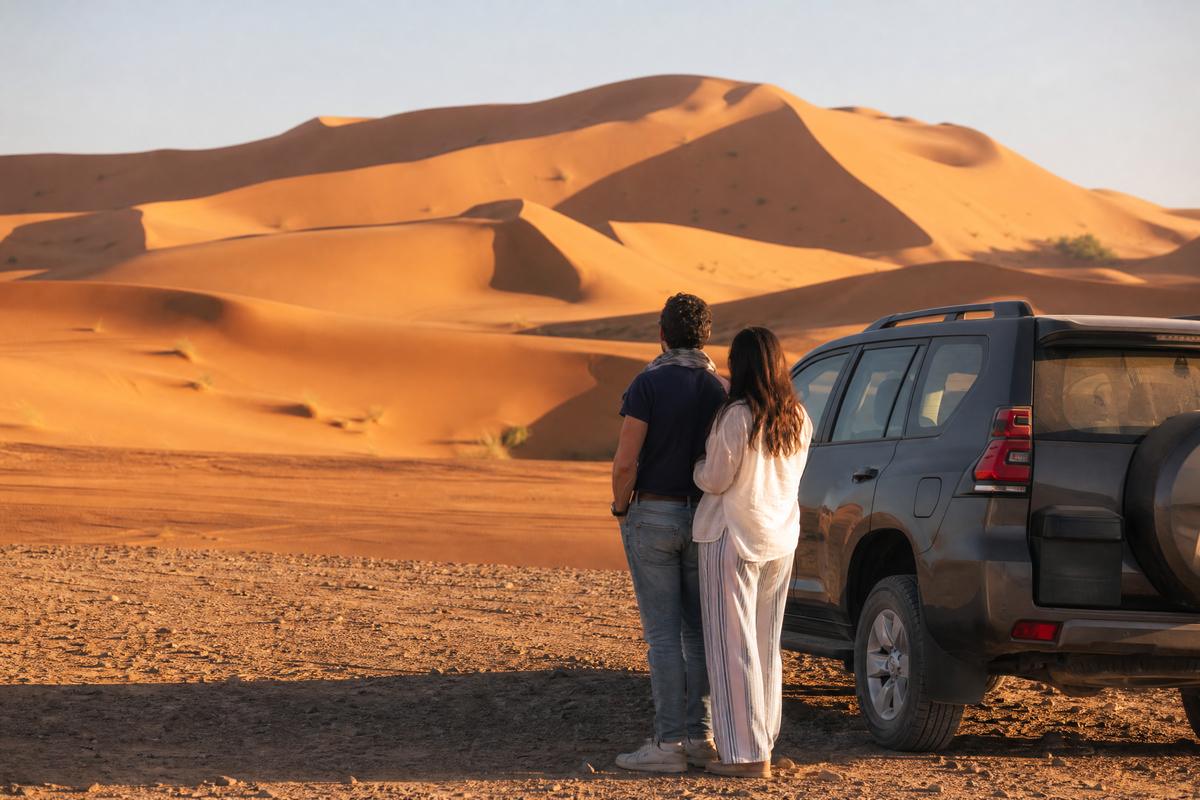
If you prefer not to ride, you can walk alongside, or reach the camp by 4x4. Tell us when you book.
Arriving at the camp
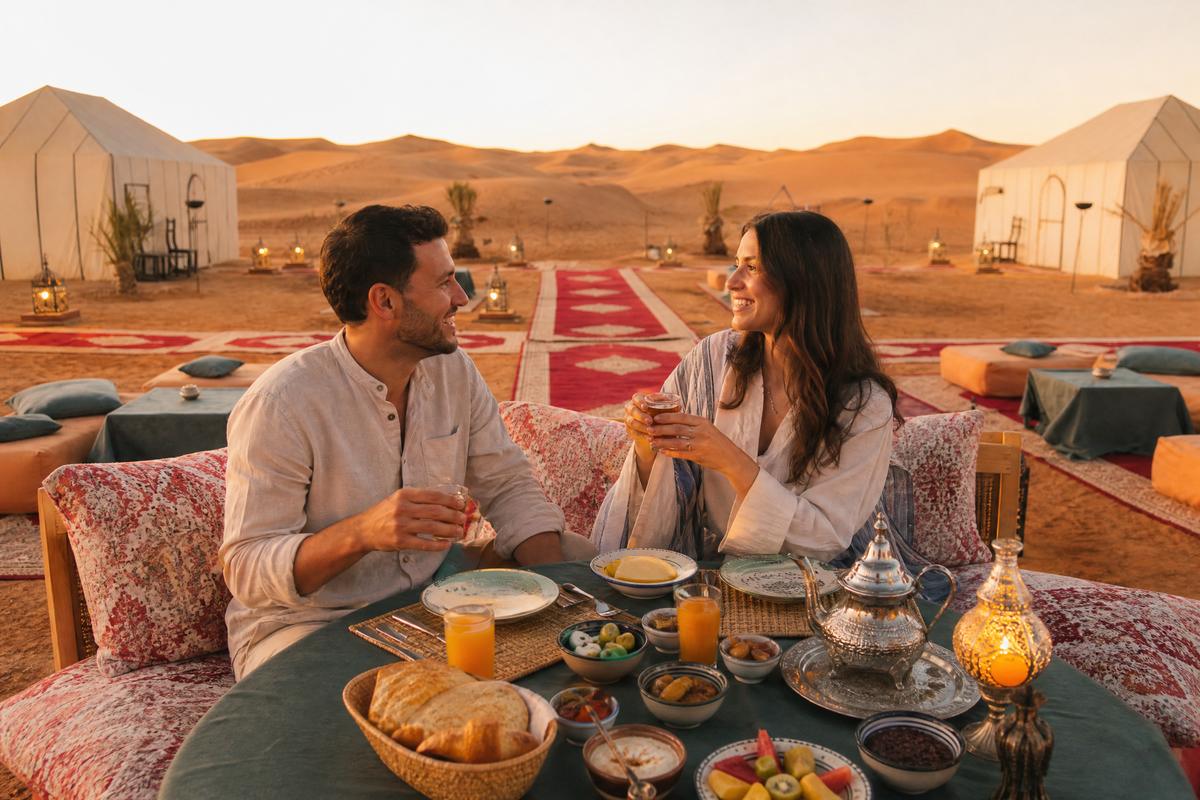
A camp is a circle of tents around a central fire, with carpets laid on the sand and lanterns lighting the paths. The staff welcome you with mint tea and show you to your tent.
| Standard camp | Luxury camp | |
|---|---|---|
| Tent | Traditional Berber tent | Private tent, larger |
| Bed | Simple bed, thick blankets | Real double or twin bed |
| Bathroom | Shared toilets and showers | Your own bathroom in the tent |
| Shower | Shared, hot water | Hot shower in your tent |
| Dinner, music, camels | Same | Same |
Dinner and music
Dinner usually begins with harira, a tomato and lentil soup, followed by a tagine of chicken or vegetables, bread, salads and fruit. It is served in a dining tent or outside when the weather allows. Vegetarian meals are easy; tell us about allergies in advance.
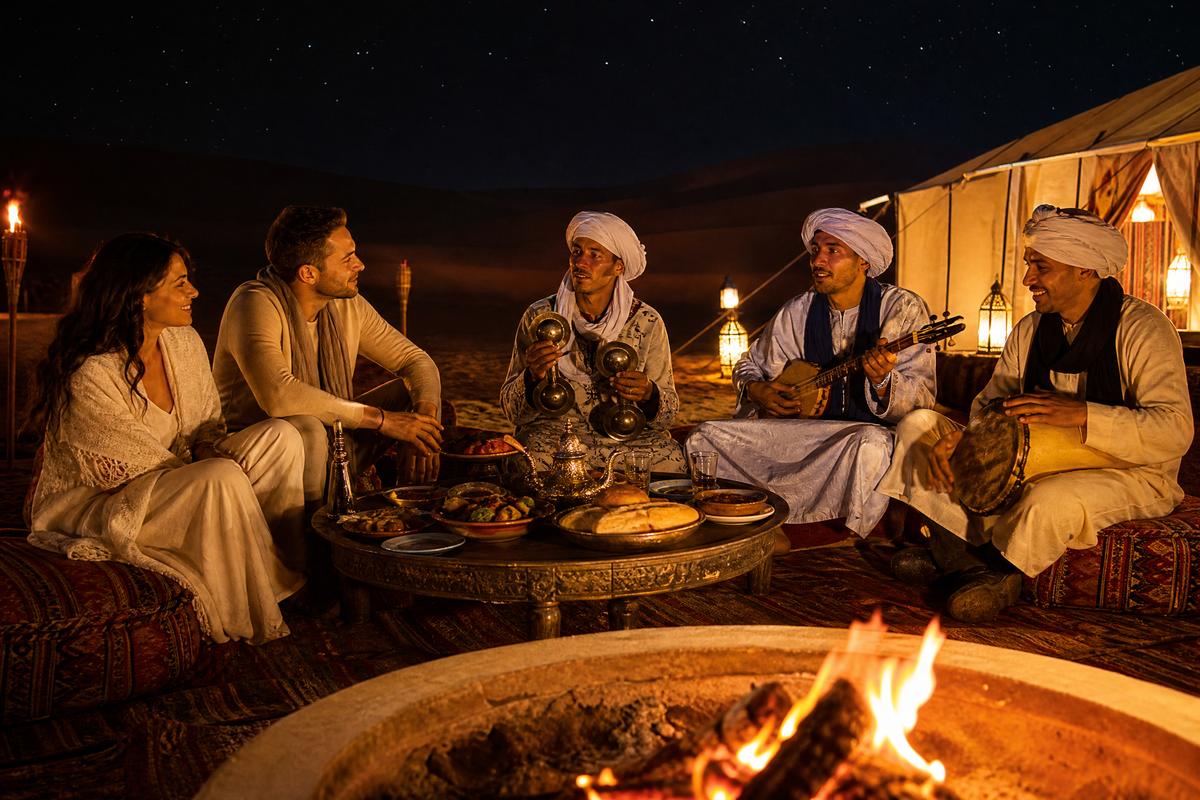
After dinner the drums come out. The camp staff play and sing Berber and Gnaoua songs around the fire, and sooner or later everyone is clapping along. It is not a show; it is simply what happens in the desert at night.
The stars
Walk thirty metres away from the camp lights, lie back on a dune and give your eyes ten minutes to adjust. On a moonless night the Milky Way stretches from one horizon to the other. On a full-moon night the dunes turn silver and you can walk without a torch. Both are beautiful; if you have a preference, ask us for the moon phase of your dates.
The cold, and how to sleep well
The desert is hot by day and can be cold at night. From November to March, temperatures can drop close to 0 °C in the dunes. Tents have thick blankets, but bring a warm layer, socks and a hat for the evening. From April to October nights are mild, and some travellers drag their mattress outside to sleep under the stars.
The questions people are shy to ask
Toilets: standard camps have shared toilets and showers a few steps from the tents; luxury camps have a private bathroom in each tent. Electricity: most camps have lights and a place to charge your phone; Wi-Fi is rare and mobile signal comes and goes. Safety: the camp staff stay on site all night.
Sunrise
Around 06:00 your guide knocks on your tent. You climb the nearest high dune in the half-light, sit on the cold sand and wait. The sun comes up over the Sahara in a few minutes, and for once nobody talks. Then breakfast at the camp, and the camels take you back to Merzouga.
What to put in your small bag
A warm layer and a hat, a scarf for sun and sand, a head torch, your toothbrush, any medicine you take, a phone charger or power bank, and wet wipes. That is all you need.
Sharing the camp
Most camps host several groups at once, which is part of the charm: travellers from a dozen countries around the same fire, swapping stories about the road. If you prefer quiet, the luxury camps are smaller and calmer, and on private or Elite journeys we can arrange a tent set a little apart, or a private dinner on a dune with lanterns and a fire only for you.
After the night
On the way back to Merzouga, the dunes look completely different in the morning light: pale, soft, full of tracks from the night. Most travellers are quiet on this ride. It is the moment the night sinks in.
Questions
Is there a toilet in a desert camp?
Yes. Standard camps have shared toilets and showers; luxury camps have a private bathroom with a hot shower in each tent.
Is there electricity or Wi-Fi in the camp?
Usually lights and charging points. Wi-Fi is rare, and mobile signal comes and goes in the dunes.
Is it safe to sleep in the desert?
Yes. Camps are run by staff who stay on site all night.
Is it cold at night in the Sahara?
From November to March, nights can drop close to 0 °C. Bring a warm layer and a hat.
Do I have to ride a camel to reach the camp?
No. You can walk alongside or reach the camp by 4x4; tell us when you book.